
Harm Reduction for Alcohol Use in the Workplace: A Smarter, Compassionate Approach

In many organizations, alcohol misuse remains an invisible challenge often unspoken, yet deeply affecting employee health, workplace safety, and overall productivity. Instead of strict disciplinary measures, forward thinking companies are adopting a harm reduction approach a strategy rooted in compassion, prevention, and sustainable support.
A Real Story: Why Harm Reduction Works
A few years ago, I worked with an organization where a valued team member let’s call him Raj was struggling. His performance had slipped, deadlines were being missed, and colleagues noticed increasing irritability.
Eventually, it was discovered that Raj was drinking heavily after work and sometimes even during lunch breaks.
Instead of immediate punishment, the company chose a different path: harm reduction.
- Raj was connected to the Employee Assistance Program (EAP).
- He received confidential counseling and time to attend support meetings.
- Workplace culture shifted team lunches offered non-alcoholic options, and managers were trained to recognize early signs of stress and misuse.
Over time, Raj reduced his drinking, regained his confidence, and became one of the organization’s most reliable employees.
This is the power of compassion-driven workplace policies.
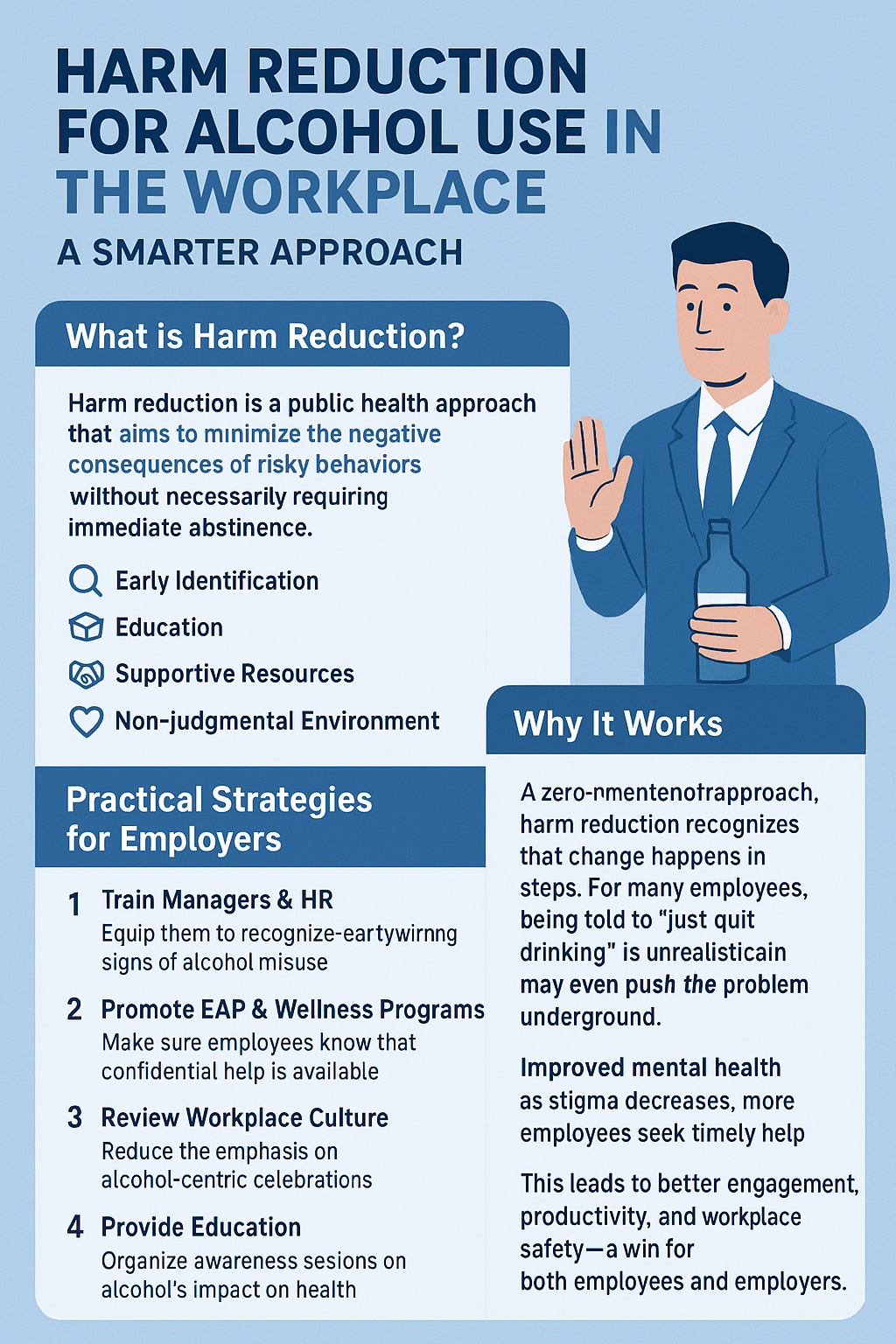
What is Harm Reduction?
Harm reduction is a public health approach that focuses on minimizing the negative consequences of risky behaviors rather than insisting on immediate abstinence.
In the workplace, harm reduction means:
- Early Identification – spotting concerning patterns before they escalate
- Education – providing awareness on safe limits and risks
- Supportive Resources – offering confidential access to counseling, EAPs, or wellness programs
- Non-judgmental Environment – reducing stigma so employees feel safe seeking help
Why It Matters for Companies
Not everyone is ready—or able—to quit drinking overnight. A harm reduction model empowers employees to take small, sustainable steps toward healthier habits while staying engaged at work.
Benefits for the workplace include:
✅ Improved mental health and well-being
✅ Increased employee loyalty and retention
✅ Higher productivity and workplace safety
✅ A stronger company culture built on empathy
When employees feel supported rather than punished, they are far more likely to stay motivated, rebuild trust, and perform at their best.
How Companies Can Implement Harm Reduction
Here are practical steps to bring this smarter approach into your workplace:
- Train managers to recognize early warning signs of alcohol misuse
- Promote Employee Assistance Programs (EAPs) and other wellness resources
- Redesign company events to reduce alcohol-centered gatherings
- Provide regular awareness workshops on stress, resilience, and responsible drinking
Harm reduction doesn’t mean ignoring alcohol-related issues it means meeting employees where they are and helping them move forward.
By shifting from punishment to prevention and support, organizations not only safeguard productivity but also nurture loyalty, safety, and long-term employee well-being.
👉 When companies choose compassion over discipline, everyone wins.
❓ Frequently Asked Questions (FAQs)
1. What is harm reduction in the workplace?
Harm reduction in the workplace is a compassionate strategy that focuses on minimizing the negative effects of alcohol use or other risky behaviors. Instead of strict punishment, employees are offered support, counseling, and wellness resources.
2. How does alcohol misuse affect workplace performance?
Alcohol misuse can lead to absenteeism, poor concentration, missed deadlines, and workplace safety issues. It also impacts team morale and overall productivity.
3. Why should companies adopt harm reduction strategies?
Companies benefit from higher employee loyalty, improved mental health, better safety, and increased productivity when they adopt harm reduction approaches instead of punishment.
4. What role do Employee Assistance Programs (EAPs) play?
EAPs provide confidential counseling, resources, and referrals to employees struggling with alcohol misuse or stress, helping them recover while staying engaged at work.
5. How can managers support harm reduction?
Managers can be trained to recognize early warning signs, reduce stigma, encourage open conversations, and promote wellness programs in the workplace.